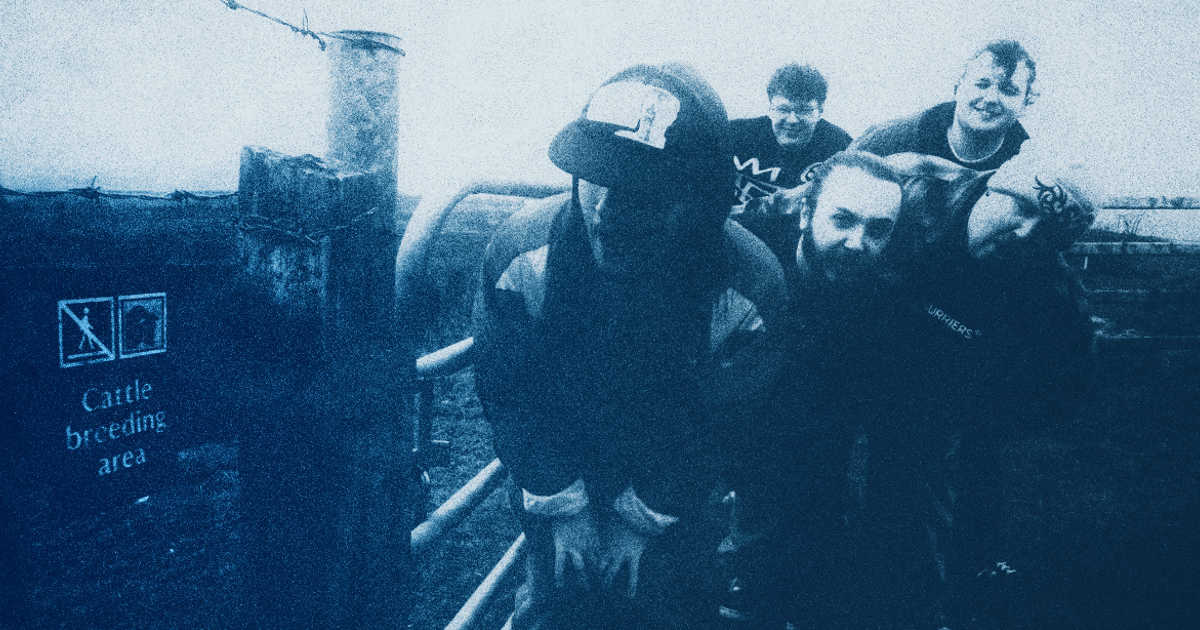
Adam Loughran Explores the Fallout of Love on New Single White Flags

Louth singer-songwriter Adam Loughran returns with White Flags
, a dark, cinematic pop track that picks up where his previous single, God Save Him, left off. This time, he's looking at what happens when two people try to put a broken relationship back together, only to find themselves facing the same problems all over again.
Released independently through his own imprint, Clocktower Records, the single continues a story that Loughran began exploring with September's God Save Him
. His music often deals with the complicated side of relationships, drawing on personal experiences and vivid imagery to tell stories that don't always have a straightforward ending.
A Darker, Cinematic Sound
Musically, White Flags
takes a dark cinematic pop approach, built around layers of synthesizers, electronic percussion and a rhythm that gradually gathers momentum. There's a sense of tension running through the track, with the arrangement slowly building towards a dramatic crescendo rather than giving everything away too early.
Loughran makes good use of layered vocals throughout, with echoing harmonies adding a haunting, almost isolated feel to the song. His voice sits comfortably within the electronic arrangement, while the overlapping vocal parts help bring out the frustration and uncertainty behind the lyrics. It's a sound that suits the story he's telling.
When Making Peace Isn't Enough
Lyrically, White Flags
follows the aftermath of a breakup and the temptation to give a relationship another chance. Written shortly after his own split, Loughran reflects on a relationship he once viewed through rose-tinted glasses, gradually coming to terms with the difference between how things seemed and how they really were.
What initially looks like an opportunity to start again soon becomes a return to familiar arguments and unresolved problems. There's no big moment of triumph or dramatic sense of closure here. Instead, the song focuses on the tiredness that comes with trying to fix something when neither person can quite escape the past.
The image of white flags turning red is particularly effective, taking a familiar symbol of surrender and turning it into something far less hopeful. It sums up the song's central idea without overcomplicating it. Sometimes calling a truce doesn't mean the fighting is finished, and making peace isn't necessarily the same as moving on.

Final Verdict
With White Flags
, Adam Loughran continues to build on the story introduced in God Save Him
, bringing a darker electronic sound to a familiar but complicated subject. The layered vocals and slow-building arrangement work well with the lyrics, while the song's strongest quality is its refusal to offer an easy resolution. It's another interesting step forward for the Louth songwriter.
The single, White Flags, is available through all streaming platforms.
Photo Credit: Adam Loughran