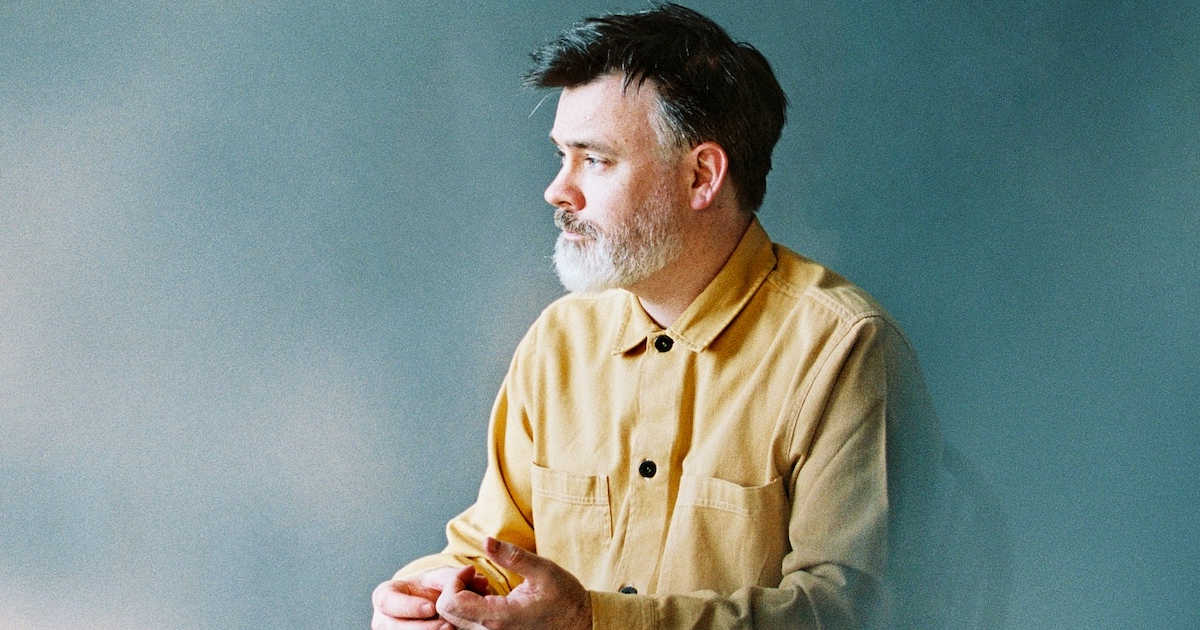
Glen Hansard: The Busker Who Became One of Ireland's Greatest Musical Storytellers
There are very few artists who come to define an entire generation of Irish music. Glen Hansard was one of them. Whether you first discovered him fronting The Frames, singing heartbreaking duets with The Swell Season, watching him in The Commitments or Once
, or simply passing him while he busked on Grafton Street, Hansard possessed a rare gift. He could make every lyric feel lived-in. Every performance felt like a conversation rather than a concert.
His journey from the streets of Dublin to the Academy Awards remains one of the greatest stories in Irish music, proving that authenticity, perseverance and heart can take an artist further than fame ever could.
Growing Up in Ballymun
Born and raised in Ballymun, Dublin, Hansard's songwriting was rooted in ordinary life. Growing up in a working-class community, family gatherings were filled with traditional Irish sing-alongs, where storytelling mattered as much as the songs themselves.
It was especially through his mother's side of the family that he developed his love of music. Recognising his passion from an early age, she gifted him his first guitar - a simple gesture that would unknowingly change the course of Irish music.
Those early years taught Hansard that songs weren't just entertainment. They were stories, memories and shared experiences, lessons that would define his songwriting for the rest of his life.
The Streets That Made Him
School never truly suited Hansard. Teachers, friends and even his school principal, Frankie Burns, recognised that his future wasn't in a classroom but in music. At just thirteen years old he picked up his acoustic guitar and headed for Grafton Street, where he would spend his teenage years busking in Dublin city centre.
Those streets became his education.
Long before busking became a recognised stepping stone for aspiring musicians, Hansard helped transform Grafton Street into one of the world's great musical stages. While he certainly wasn't the first performer to play there, he became the figure who brought international attention to Dublin's incredible street music culture.
Artists including Rodrigo y Gabriela, Damien Rice, Gavin James and Dermot Kennedy would all follow a path that Hansard helped establish.
More importantly, Grafton Street became the place where lifelong musical friendships were formed—friendships that would eventually become The Frames.
One Demo Changed Everything
After four years of busking, seventeen-year-old Hansard borrowed money from family members to record a simple demo tape. Only fifty copies were produced. One eventually landed on the desk of an A&R executive at Island Records. That tape was enough.
Hansard earned a recording contract and immediately surrounded himself with the musicians he trusted most—not seasoned session players, but the fellow buskers he had spent years performing beside. Among them was violinist Colm Mac Con Iomaire, whose contribution would become central to The Frames unmistakable sound.
It was one of Irish music's great examples of grassroots success.
The Commitments Introduced Him to the World
Before The Frames became household names, Hansard found himself cast by director Alan Parker as guitarist Outspan Foster in the classic Irish film The Commitments.
Released in 1991, the film captured the humour, ambition and soul of working-class Dublin through the story of a group of musicians attempting to create Dublin Soul.
Packed with unforgettable performances and infectious music, The Commitments became the highest-grossing Irish film ever released at the time and remains one of Ireland's most beloved movies.
For many Irish people it isn't simply a film - it's part of the national culture. Alongside Father Ted, it remains among the most quoted pieces of Irish entertainment ever created.
The Frames Became Ireland's Greatest Live Band
Commercial success never arrived easily for The Frames.
Major record labels struggled to understand their emotionally charged blend of alternative rock, folk and passionate live performance. After years of frustration, the band found freedom through independence, allowing their music to develop naturally without compromise.
Everything changed in 2003.
Their live album Set List perfectly captured the electricity of a Frames concert. Raw, unpredictable and emotionally overwhelming, it became the definitive document of a band operating at the absolute peak of their powers.
Almost overnight, The Frames evolved from cult favourites into one of Ireland's biggest and most respected bands.
Their influence would ripple through the next generation of Irish artists, inspiring musicians including Damien Rice, Hozier, Mundy and countless others.
Once
Changed Everything
While The Frames had earned legendary status at home, Hansard's biggest international breakthrough arrived through an unlikely independent film.
Originally conceived as a modest collaboration with Czech singer-songwriter and pianist Markéta Irglová, Once
became one of the biggest surprise successes in modern cinema.
The film tells the story of a Dublin busker and a Czech immigrant brought together through music. Over the course of a single week they assemble a small band, record an album and form a deeply emotional connection built around songwriting rather than romance.
Its authenticity resonated around the world.
At its heart was the breathtaking ballad Falling Slowly, written by Hansard and Irglová.
In 2008, the song achieved the impossible. It won the Academy Award for Best Original Song, defeating heavily favoured productions from major Hollywood studios and introducing millions of people to the emotional power of Irish songwriting.
It remains one of the defining moments in Ireland's musical history.
A Career Built on Integrity
Many artists would have embraced Hollywood after winning an Oscar.
Hansard chose a different path.
Instead, he focused on artistic freedom, launching an acclaimed solo career while continuing to collaborate with musicians he admired rather than chasing commercial trends. His album Didn't He Ramble
earned a Grammy nomination, while his work expanded into film scores, television and collaborations with artists including Eddie Vedder.
Despite worldwide recognition, he never lost sight of where he came from.
Every Christmas Eve he returned to Dublin's Grafton Street to help lead the annual charity busk, raising hundreds of thousands of euros for organisations supporting people experiencing homelessness.
It perfectly reflected the man behind the music.
His compassion matched his artistry. In one final full-circle moment, Hansard reunited with Markéta Irglová for a new chapter of The Swell Season, releasing Forward
in 2025 and embarking on a successful international tour before his sudden passing in July 2026.
Glen Hansard's Legacy Will Echo for Generations
Few artists have left such an enduring imprint on Irish culture.
Glen Hansard proved that extraordinary music could emerge from ordinary streets. He inspired generations of musicians to pick up a guitar, stand on a street corner and believe their songs mattered.
His influence can be heard throughout modern Irish music, from the emotional honesty of Damien Rice to the soulful intensity of Hozier and the storytelling of Dermot Kennedy.
Yet statistics, awards and record sales never truly measured Hansard's greatness. His greatest achievement was making people feel something. Whether standing alone on Grafton Street, commanding a sold-out arena with The Frames, accepting an Academy Award, or quietly raising money for those less fortunate, he remained the same passionate musician who believed songs could change lives.
Ireland has produced many great singer-songwriters.
Glen Hansard belongs among the very greatest.
His voice may have fallen silent, but the songs - and the inspiration they continue to give—will live on for generations to come.
READ MORE | The Best Irish Music Right Now