The Dubliners - The Story of Ireland's Legendary Folk Band
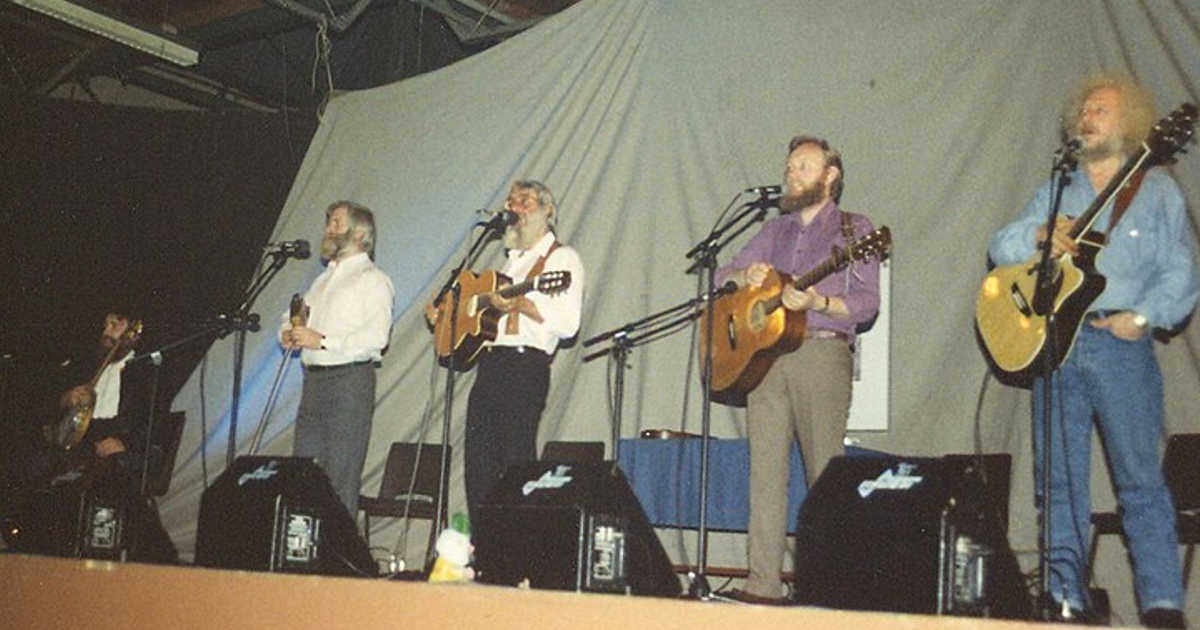
Formation
The Dubliners began life in 1962, when a group of traditional Irish musicians started playing together in O'Donoghue's Pub on Merrion Row in Dublin. The pub was already a popular spot for folk musicians, and it wasn't long before Ronnie Drew, Barney McKenna, Luke Kelly and Ciarán Bourke began attracting attention with their lively sessions and traditional Irish songs.
The group initially performed under the name The Ronnie Drew Ballad Group, with Drew's distinctive gravelly voice giving them a sound that was hard to mistake. Barney McKenna brought his brilliant tenor banjo playing, while Luke Kelly's powerful vocals and Ciarán Bourke's musical talents helped shape the band's early sound. In 1962, they adopted the name The Dubliners, inspired by James Joyce's famous collection of short stories.
The Dubliners
As word spread about their performances in O'Donoghue's, The Dubliners began playing in other pubs and venues around the city. Their mixture of traditional ballads, drinking songs and humour quickly made them popular with Dublin audiences. They weren't interested in putting on a polished show, preferring to keep things spontaneous, with plenty of banter between songs and a sound that captured the atmosphere of an Irish pub session.
The Dubliners with Luke Kelly
In 1964, The Dubliners released their self-titled debut album, The Dubliners with Luke Kelly
, featuring traditional Irish songs that showcased the group's raw musical style. Recorded live, the album captured the energy of their early performances. However, Luke Kelly left the band later that year and moved to England, where he became involved in the folk music scene. His departure left a big gap in the group's sound.
Finnegan Wakes
Luke Kelly returned to The Dubliners in 1965, bringing his powerful voice back into the group. During his absence, fiddle player John Sheahan had joined the lineup, adding another dimension to their music. Their 1966 live album, Finnegan Wakes
, recorded at Dublin's Gate Theatre, captured the band at their lively best, with traditional songs, audience participation and the kind of humour that had become part of their appeal.
Breakthrough
The Dubliners enjoyed their biggest commercial breakthrough in 1967 with the release of Seven Drunken Nights. Produced by Phil Coulter, the single reached number seven on the UK Singles Chart and introduced the group to a much wider audience. The song told the humorous story of a drunken husband returning home each night and discovering increasingly suspicious evidence of his wife's infidelity.
Despite its popularity, Seven Drunken Nights
caused controversy because of its suggestive lyrics and references to drinking and adultery. The song was banned by RTÉ, although that didn't stop it becoming a major hit. In fact, the controversy probably helped its popularity, with the record receiving plenty of attention in Britain. It also showed that traditional Irish folk music could compete in the mainstream charts.
Major Changes to the Lineup
The Dubliners went through several lineup changes over the years, although their popularity continued. Ronnie Drew left the group in 1974 to pursue a solo career, with Jim McCann stepping in as his replacement. Drew returned in 1979, while McCann departed. The band suffered another major loss in 1988 when founding member Ciarán Bourke died, having been unable to perform regularly since suffering a brain haemorrhage in 1974.
Further changes followed in the 1990s, with Ronnie Drew leaving again in 1995 and Paddy Reilly joining the group. Eamonn Campbell also became a full member in 1987, bringing his guitar playing and production experience to the band. Barney McKenna remained a central figure until his death in 2012, while John Sheahan became the longest-serving member, helping keep The Dubliners' music alive through several generations.
Death of Luke Kelly
Luke Kelly died on 30th January 1984, aged just 43, following a battle with a brain tumour. His death was a devastating loss for The Dubliners and the Irish music scene. Known for his unmistakable voice and passionate delivery, Kelly had become one of Ireland's most respected folk singers. His performances of songs such as Raglan Road
and The Town I Loved So Well
remain among the most memorable recordings in Irish folk music.
The Songs
The Dubliners recorded some of the best-known songs in Irish folk music, including Whiskey in the Jar
, The Wild Rover
, Dirty Old Town, The Irish Rover
and Molly Malone
. Their repertoire ranged from lively drinking songs to emotional ballads about love, hardship and Irish history. Songs such as Black Velvet Band
and Seven Drunken Nights
became crowd favourites, while Luke Kelly's performances of Raglan Road
showed the more serious side of the band.
The Albums
Over their long career, The Dubliners released numerous studio and live albums, beginning with their self-titled debut in 1964. Early releases such as Finnegan Wakes
, A Drop of the Hard Stuff
and More of the Hard Stuff
helped establish their reputation. Later albums included Revolution
, Plain and Simple
and 40 Years
, while their many live recordings captured the atmosphere and humour that made their concerts so popular.
Final Verdict
The Dubliners were much more than just another Irish folk band. With their rough-edged vocals, brilliant musicianship and unmistakable Dublin humour, they helped bring traditional Irish music to audiences around the world. They never lost the pub-session feel that made them popular in the first place, even as their fame grew. Their influence can still be heard in Irish folk music today, and their songs remain as popular as ever.
READ MORE | 10 Essential Songs By The Dubliners
Photo Credit: Aloys Soullie / Wikimedia Commons