Thin Lizzy Album Guide: Every Album & Essential Songs
Few Irish bands have left behind a catalogue as distinctive as Thin Lizzy. Across twelve studio albums, the Dublin group evolved from a blues and folk-rock trio into one of the defining hard-rock bands of the 1970s. Along the way, they developed the twin-guitar harmonies that became their signature.
At the centre was Phil Lynott, whose songs about Dublin, romance, outsiders and Irish identity gave Thin Lizzy a personality nobody else could replicate. From Eric Bell to Gary Moore and Scott Gorham, the musicians around him changed repeatedly. Here's our guide to every Thin Lizzy studio album.
Thin Lizzy (1971)
Released on 30th April 1971, Thin Lizzy's self-titled debut sounds far removed from the hard rock that would eventually make them famous. The original trio of Phil Lynott, Eric Bell and Brian Downey were rooted in blues and folk rock, with psychedelic touches giving the album an exploratory early-'70s atmosphere.
Look What the Wind Blew In
is the standout and the clearest indication of where Thin Lizzy might eventually go. Honesty Is No Excuse" reveals Lynott's gentler side, while
Diddy Levine
shows his early interest in storytelling. Éire
also introduces the Irish themes he would revisit throughout his career.
Shades of a Blue Orphanage (1972)
Released on 10th March 1972, Shades of a Blue Orphanage
continued the debut's mixture of blues, folk and psychedelic rock. Eric Bell's guitar remains central, but Lynott was becoming more confident with melody and autobiographical writing. The classic Thin Lizzy sound was still some distance away, but the songwriting was developing.
Buffalo Gal
is the essential song, with a dreamy quality far removed from later Lizzy hard rock. Sarah
, written for Lynott's grandmother, is similarly tender, while Baby Face
adds more urgency. The title track draws on Lynott's memories, revealing a songwriter becoming increasingly comfortable bringing his own life into the music.
Vagabonds of the Western World (1973)
Released on 21st September 1973, Vagabonds of the Western World
is where the original trio really begins to sound like a powerful rock band. The blues and folk influences remain, but Eric Bell's guitar is tougher and Lynott's songwriting has taken a significant step forward. It would be Bell's final Thin Lizzy album.
The Rocker
is the essential track, a swaggering blast of hard rock that points directly towards the band's future. The title track introduces Lynott's romantic outlaw imagery, while Little Girl in Bloom
and A Song for While I'm Away
reveal his softer side. For anyone exploring early Thin Lizzy, Vagabonds
is the place to begin.
Nightlife (1974)
Released on 8th November 1974, Nightlife
introduced Scott Gorham and Brian Robertson, creating the guitar partnership that would transform Thin Lizzy. The famous twin-guitar sound wasn't fully formed yet, however. The album remains surprisingly restrained, mixing hard rock with blues, soul and softer material as the new line-up finds its identity.
Still in Love with You
is the masterpiece, a soulful ballad that became one of Thin Lizzy's greatest live songs. She Knows
is warm and melodic, while It's Only Money
hints at the harder direction ahead. Philomena
, written for Lynott's mother, adds another deeply personal moment to an underrated transitional album.
Fighting (1975)
Released on 12th September 1975, Fighting
is where classic Thin Lizzy properly arrives. Gorham and Robertson were developing the harmonised guitar lines that became the band's signature, while Brian Downey's drumming supplied both power and swing. Lynott also sounds increasingly assured, balancing hard-rock swagger with strong melodies.
Their version of Bob Seger's Rosalie
became a Thin Lizzy favourite, particularly on stage. Wild One
features beautiful guitar harmonies, while Fighting My Way Back
and Suicide
bring a harder edge. The international breakthrough hadn't happened yet, but "Fighting" sounds like a band finally ready for it.
Jailbreak (1976)
Released on 26th March 1976, Jailbreak
was the album that changed everything. The twin guitars were fully developed, Lynott was writing with remarkable confidence and producer John Alcock gave the record a powerful, accessible sound. Hard rock dominates, but Lynott fills the songs with gangs, warriors, cowboys and romantic outsiders.
The Boys Are Back in Town
became Thin Lizzy's signature song, while Jailbreak
contains one of their great riffs. Cowboy Song
moves from reflection into widescreen rock, and Emerald
combines Irish history with ferocious guitars. With excellent deeper cuts such as Warriors
, this remains the obvious Thin Lizzy starting point.
Johnny the Fox (1976)
Released on 16th October 1976, only months after Jailbreak
, Johnny the Fox
has a darker and more streetwise character than its predecessor. Hard rock remains at the centre, but funk and soul increasingly enter the grooves. Lynott's cast of gamblers, hustlers and troubled lovers also gives the album a tougher atmosphere.
Don't Believe a Word
is the immediate classic, a compact burst of guitar, melody and cynical romance. Johnny the Fox Meets Jimmy the Weed
rides an irresistible funk groove, while Borderline
is beautifully weary. Old Flame
and the heavier Massacre
add further depth to an album that deserves far more than Jailbreak
comparisons.
Bad Reputation (1977)
Released on 2nd September 1977, Bad Reputation
arrived as the classic line-up began to fracture. Brian Robertson's hand injury meant Scott Gorham handled much of the guitar work, yet Thin Lizzy produced one of their strongest records. Tony Visconti's production is sharp and muscular, while Brian Downey delivers exceptional drumming.
The title track is pure Thin Lizzy swagger, but Dancing in the Moonlight (It's Caught Me in Its Spotlight)
is equally essential, mixing teenage romance, saxophone and an irresistible bassline. Opium Trail
brings a darker edge, while Soldier of Fortune
and Dear Lord
show the album's range. It's one of their finest records.
Black Rose: A Rock Legend (1979)
Released on 13th April 1979, Black Rose: A Rock Legend
brought Gary Moore back alongside Scott Gorham. Moore's fiery guitar playing gave Thin Lizzy renewed energy, while Lynott increasingly drew on Irish history and mythology. The combination produced one of the band's most ambitious and powerful albums.
Waiting for an Alibi
is magnificent, while Do Anything You Want To
delivers pure defiance. Got to Give It Up
later acquired painful significance, and Sarah
reveals Lynott's tender side. The epic Róisín Dubh (Black Rose): A Rock Legend
mixes Irish melodies and mythology with hard rock to spectacular effect.
Chinatown (1980)
Released on 10th October 1980, Chinatown
introduced Snowy White as Gary Moore's replacement. White's restrained, blues-oriented playing changed the guitar chemistry, while Darren Wharton's keyboards became increasingly noticeable. The result is less explosive than Black Rose
, but the familiar combination of hard rock, melody and Lynott's storytelling remains.
The title track is the obvious standout, built around a muscular riff and a strong chorus. We Will Be Strong
provides a melodic opening, while Killer on the Loose
ventures into darker territory. Sugar Blues
gives the guitars room to stretch out, and Didn't I
returns to Lynott's familiar bruised romanticism.
Renegade (1981)
Released in November 1981, Renegade
finds Thin Lizzy moving further from their classic 1970s sound. Snowy White remained alongside Scott Gorham, while Darren Wharton's expanded keyboard role gives the record a more atmospheric early-'80s character. It's darker and less immediate than the band's best-known albums.
Angel of Death
opens in dramatic fashion, while the title track maintains the album's uneasy atmosphere. Hollywood (Down on Your Luck)
offers more straightforward rock'n'roll energy, and The Pressure Will Blow
puts the guitars back at the centre. It's Getting Dangerous
provides an appropriately ominous ending to an underrated record.
Thunder and Lightning (1983)
Released on 4th March 1983, Thunder and Lightning
gave Thin Lizzy one final reinvention. John Sykes replaced Snowy White, bringing a sharper and more aggressive guitar style alongside Scott Gorham. The result pushes Thin Lizzy towards heavy metal and makes their final studio album easily one of their hardest.
The title track is a furious opener, driven by Downey's drumming and heavy guitars. Cold Sweat
is another essential late-period song, while The Holy War
and This Is the One
maintain the intensity. The Sun Goes Down
offers a darker, atmospheric contrast, ensuring Thin Lizzy's studio career ended with real ambition.
Where Should You Start With Thin Lizzy?
If you're buying one Thin Lizzy studio album, start with Jailbreak
. Follow it with Black Rose: A Rock Legend
, where Gary Moore adds extra fire, and then Bad Reputation
, arguably the band's most focused combination of hard rock, melody and songwriting.
From there, try Johnny the Fox
and Fighting
, before going back to the Eric Bell era with Vagabonds of the Western World
. Nightlife
reveals the band's softer side, while Thunder and Lightning
provides a surprisingly heavy final chapter. The remaining albums are well worth exploring once the essentials are covered.
Final Verdict
Thin Lizzy's twelve studio albums document one of the great journeys in Irish rock. They began with blues, folk and psychedelia before reinventing themselves around an influential twin-guitar sound. Yet they could also be soulful, funky, romantic and unmistakably Irish, giving the catalogue far more variety than their biggest hits suggest.
The constant was Phil Lynott. His fighters, lovers, soldiers, hustlers and dreamers often hid vulnerability beneath their swagger, giving Thin Lizzy an emotional depth few hard-rock bands could match. Start with Jailbreak
, Bad Reputation
and Black Rose
, but keep digging. There's far more to Thin Lizzy than the greatest hits.
READ MORE | 10 Essential Thin Lizzy Songs
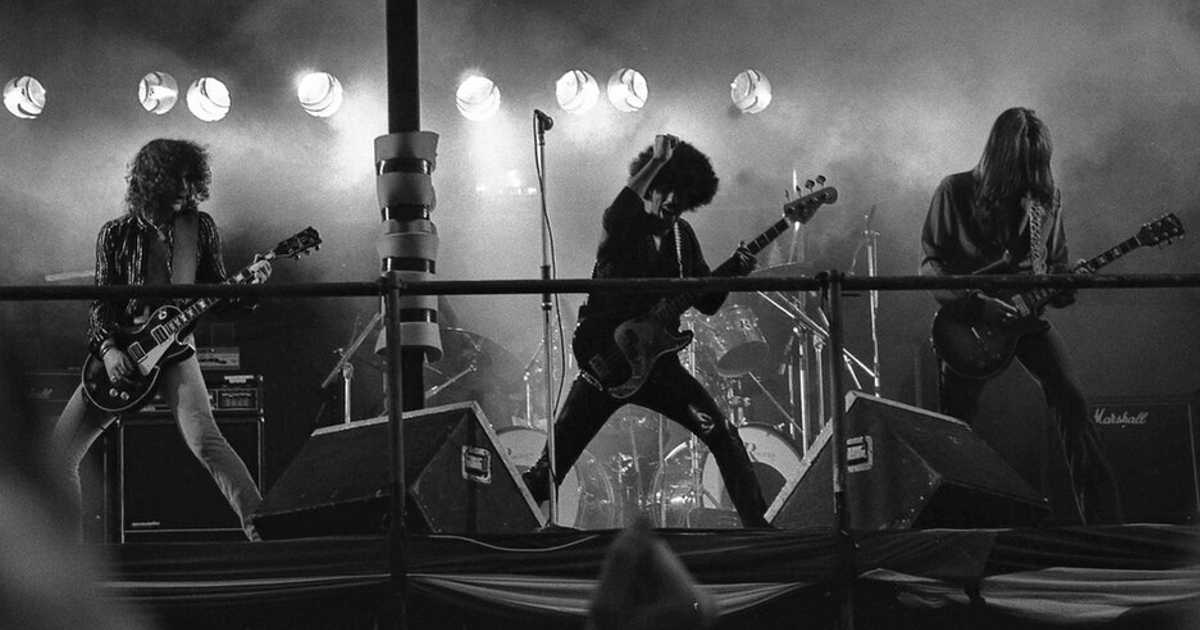
Photo Credit: Thin Lizzy performing at Pinkpop in 1978. Photo: Chris Hakkens / Wikimedia Commons. Licensed under CC BY-SA 2.0.