U2 Biography: How Four Dublin Teenagers Became Rock Superstars
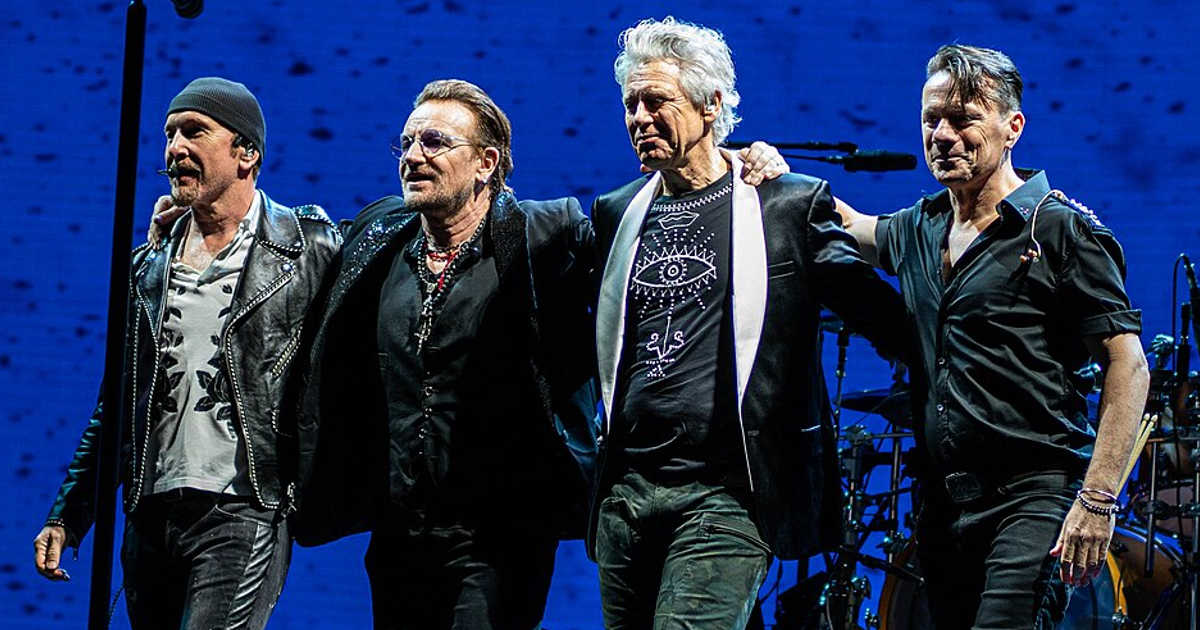
Few Irish bands have made a mark on the world quite like U2. Formed in Dublin in 1976, Bono, The Edge, Adam Clayton and Larry Mullen Jr. went from rehearsing as teenagers to filling stadiums, topping charts and becoming one of the most successful rock bands of their generation.
Along the way, they gave us songs like Sunday Bloody Sunday
, Pride (In the Name of Love)
, With or Without You
, One
and Beautiful Day
- tracks that have become part of Irish music history. Their sound has changed considerably over the years, but that unmistakable U2 identity has always remained.
Formation
The story of U2 began in Dublin in September 1976 when drummer Larry Mullen Jr. put a notice on the board at Mount Temple Comprehensive School looking for musicians to form a band. A group of teenagers gathered at Mullen’s home in Artane and, from those early rehearsals, the classic U2 line-up emerged: Paul Hewson, better known as Bono, on vocals; David Evans, aka The Edge, on guitar; Adam Clayton on bass; and Larry Mullen Jr. on drums. They initially performed under the name Feedback, later became The Hype and eventually settled on U2. It was a modest beginning for four Dublin teenagers who would eventually become one of the biggest rock bands in the world.
The Early Years
U2’s early years were all about learning on the job. Inspired by the energy of punk and post-punk, the young band developed a reputation around Dublin for passionate live performances rather than technical perfection. The arrival of manager Paul McGuinness was a major turning point, although record companies weren’t exactly queuing around the block at first. After building a following in Ireland, U2 signed with Island Records and released their debut album, Boy
, in 1980. The ingredients of the classic U2 sound were already beginning to appear: Bono’s powerful vocals, The Edge’s distinctive guitar playing and the driving rhythm section of Clayton and Mullen.
Breakthrough
U2’s first major breakthrough came with 1983’s War
. The album reached Number 1 in the UK and produced two of the band’s early classics, New Year’s Day
and Sunday Bloody Sunday
. Suddenly, U2 were no longer simply an exciting Dublin band - they were becoming an international rock act. Their reputation grew further with The Unforgettable Fire
in 1984 and their memorable performance at Live Aid in 1985. Then came the big one. Released in 1987, The Joshua Tree
turned U2 into global superstars, producing massive hits including With or Without You
and I Still Haven’t Found What I’m Looking For
.
Career
What makes U2’s career stand out is their willingness to change direction when they could easily have stuck to a winning formula. Following the huge success of The Joshua Tree
and the rootsy Rattle and Hum
, the band reinvented themselves with 1991’s Achtung Baby
. Recorded partly in Berlin, the album introduced a darker, more experimental sound influenced by alternative rock, electronic music and European dance culture.
Songs including One
, The Fly
and Mysterious Ways
introduced a very different U2, while the spectacular Zoo TV Tour transformed their concerts into enormous multimedia events. The experimentation continued with Zooropa
and Pop
before the band returned to a more direct and melodic rock sound with All That You Can’t Leave Behind
in 2000.
That album produced Beautiful Day
, one of the biggest songs of U2’s later career, while How to Dismantle an Atomic Bomb
followed in 2004 with another major hit in Vertigo
. Away from the studio, U2 became one of the biggest touring acts in the world, with increasingly ambitious live productions that helped establish their reputation as a stadium band on a truly global scale.
The Singles
U2 have built an extraordinary singles catalogue over the decades. Their first UK Top 10 hit was New Year’s Day
, which reached Number 10 in 1983, while Pride (In the Name of Love)
climbed to Number 3 the following year. With or Without You
reached Number 4 in the UK in 1987 and topped the US Billboard Hot 100, while I Still Haven’t Found What I’m Looking For
also reached Number 1 in America.
Desire
became U2’s first UK Number 1 single in 1988, while One reached Number 7 in 1992 and went on to become one of their most celebrated songs. Other major hits included Hold Me, Thrill Me, Kiss Me, Kill Me
at Number 2, Discothèque
at Number 1, Sweetest Thing
at Number 3 and Beautiful Day
at Number 1. By this stage, U2 had firmly established themselves as one of the most commercially successful Irish bands ever.
The Albums
U2’s album catalogue tells the story of a band constantly developing its sound. It began with Boy
(1980), followed by October
(1981) and the breakthrough War
(1983). The Unforgettable Fire
(1984) expanded their musical horizons before The Joshua Tree
(1987) became the album that sent them into the rock stratosphere.
Love them, hate them or argue endlessly over which U2 era was the best, U2 are impossible to ignore. They took the urgency of post-punk, mixed it with atmospheric guitars, huge choruses, political themes, spirituality and Bono’s unmistakable vocals, and turned the combination into a sound capable of filling the biggest venues on the planet. More importantly from an Irish perspective, U2 changed perceptions of what a band from Dublin could achieve. They emerged from a relatively small music scene and became genuine global superstars while retaining a strong connection to their Irish roots. Their success raised the international profile of Irish rock and helped show generations of musicians that coming from Ireland was no barrier to taking on the world. From a notice pinned to a school board in Dublin to READ MORE | 10 Essential U2 Songs Photo Credit: Photo: U2 performing in Sydney, 2019. U2start / Wikimedia Commons. Licensed under CC BY 2.0.Rattle and Hum
(1988) explored American blues, rock and roots music before
Achtung Baby
(1991) delivered one of the most dramatic reinventions of their career. Zooropa
(1993) and Pop
(1997) pushed further into electronic and experimental territory, while All That You Can’t Leave Behind
(2000) brought the band back towards the big, emotional rock songs that had made their name.How to Dismantle an Atomic Bomb
(2004) continued that approach, producing another hugely successful chapter in a recording career that had already stretched across three decades. From the youthful urgency of Boy
to the widescreen rock of The Joshua Tree
and the adventurous sound of Achtung Baby
, U2’s albums show a band rarely content to stand still.Final Verdict
The Joshua Tree
, Achtung Baby
and sold-out stadiums around the globe, U2’s journey remains one of the defining stories of Irish music. Whatever your favourite era, there’s no denying their influence, ambition or the sheer number of unforgettable songs they’ve given us.