10 Essential U2 Songs Every Music Fan Should Hear
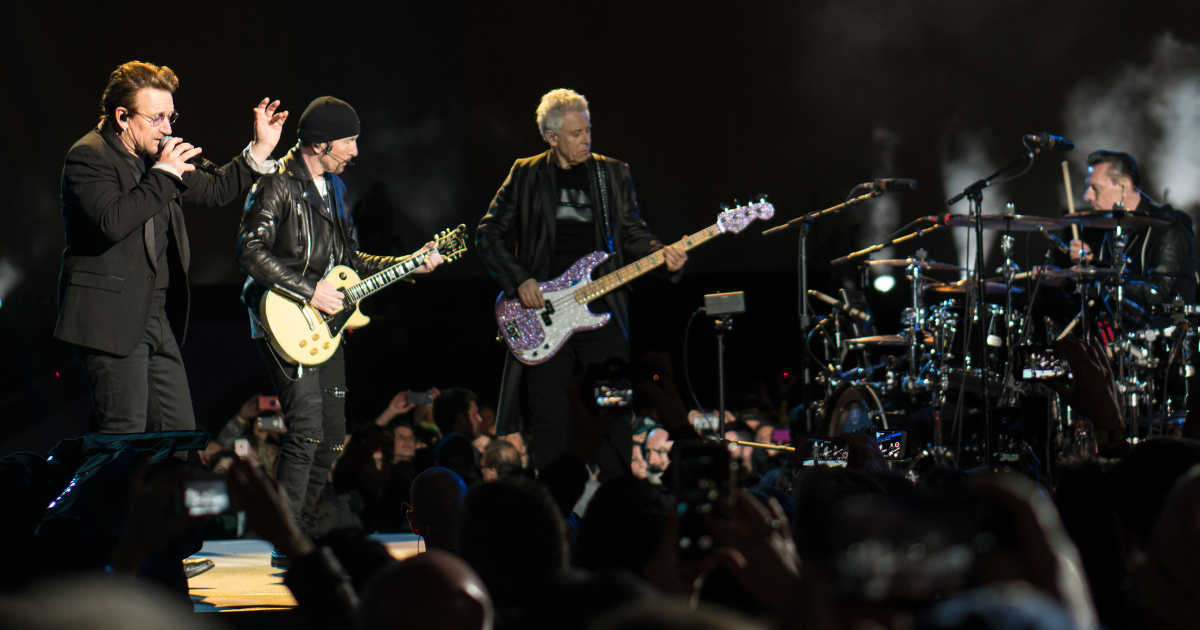
Few bands have managed to stay at the centre of rock music for as long as U2. From their early post-punk beginnings in Dublin to filling stadiums around the world, Bono, The Edge, Adam Clayton and Larry Mullen Jr. have built a catalogue packed with songs that have become part of popular culture.
Trying to narrow that catalogue down to just ten tracks isn't easy. There are massive singles, fan favourites and album tracks that could all make a convincing case. But if you're discovering U2 for the first time — or simply want a playlist featuring some of the band's greatest songs — these ten are essential listening.
1. Mysterious Ways
If Achtung Baby was the sound of U2 tearing up their old rulebook, Mysterious Ways
was one of the clearest signs that the experiment had worked. Built around Adam Clayton's wonderfully funky bassline, the track mixes alternative rock with dance, funk and electronic influences, creating something far removed from the widescreen rock of The Joshua Tree.
Lyrically, it's full of spiritual and sensual imagery, with Bono exploring attraction, surrender and the mysterious power of love. Released as a single in 1991, it became one of the defining songs of U2's reinvention and remains an instantly recognisable favourite from the Achtung Baby era.
2. Where the Streets Have No Name
Few U2 songs announce themselves quite like Where the Streets Have No Name
. The slow-building keyboards, Larry Mullen Jr.'s drums and The Edge's chiming guitar gradually come together before the whole thing explodes into one of rock's great opening moments. Bono has explained that the song was partly inspired by the idea that in Belfast a person's street could reveal their religion and social standing; he imagined somewhere those divisions simply didn't exist.
Musically, it's pure widescreen U2 - hopeful, restless and seemingly designed to be played in front of tens of thousands of people. Released in 1987, it reached No. 4 in the UK and has since become one of the band's signature live anthems.
3. With or Without You
There aren't many rock ballads as immediately recognisable as With or Without You
. The song builds patiently around Adam Clayton's bass, atmospheric guitar textures from The Edge and one of Bono's most restrained vocals before reaching its emotional peak. At its heart is a relationship caught between desire and frustration - wanting somebody while also feeling trapped by that same connection. The tension is what makes the song so powerful.
Released as the first single from The Joshua Tree, it became U2's first No. 1 on the US Billboard Hot 100 and helped push the band into a completely different level of international fame. Decades later, it remains one of the songs most closely associated with U2.
4. I Still Haven't Found What I'm Looking For
U2 have always mixed rock music with spiritual questions, but rarely as beautifully as on I Still Haven't Found What I'm Looking For
. With its gospel influence, ringing guitar and huge chorus, the song sounds uplifting even though its lyrics are built around uncertainty. Bono sings about faith, love, temptation and belief, yet the title keeps returning to the same admission: the search isn't over.
That combination of spiritual yearning and pop simplicity made it one of the standout tracks on The Joshua Tree. It also helped demonstrate that U2 could make deeply searching music without sacrificing a massive chorus, becoming one of the band's best-known songs around the world.
5. One
Sometimes the simplest U2 songs hit the hardest. One
, from 1991's Achtung Baby, emerged during a difficult period for the band and developed into one of their most enduring recordings. The lyrics deliberately resist one easy interpretation, touching on love, separation, disappointment, responsibility and the uncomfortable reality that being connected doesn't necessarily mean being the same.
Musically, it's beautifully understated, allowing the emotion to build rather than chasing a conventional stadium-rock payoff. The public response has given the song a life far beyond its original album, with One becoming a regular presence at U2 concerts and one of the band's most celebrated songs.
6. Sunday Bloody Sunday
That opening drumbeat is enough to identify Sunday Bloody Sunday
almost immediately. Released on War in 1983, the song addresses the horror of political violence associated with the Troubles, particularly Bloody Sunday in Derry, while framing its message as a rejection of the cycle of violence rather than a celebration of it.
Musically, Larry Mullen Jr.'s martial drumming, The Edge's cutting guitar and Steve Wickham's electric violin give the track an urgent, almost confrontational sound.
Its subject matter inevitably gave the song enormous weight, but it became one of U2's defining early tracks and an enduring live favourite - a protest song whose power comes from its plea to stop repeating the violence.
7. New Year's Day
New Year's Day
was the song that helped signal that U2 were becoming something much bigger. That famous opening piano line immediately sets a cold, atmospheric mood before Adam Clayton's bass and The Edge's guitar push the song forward. What began partly as a love song developed political dimensions inspired by Poland's Solidarity movement and the separation of Lech Wałęsa from his family during a period of political repression.
The result is a song that manages to feel both personal and political without losing its emotional centre. It became U2's first UK Top 10 single and remains one of the strongest examples of the dramatic post-punk sound that defined the band's early years.
8. Pride (In the Name of Love)
One of U2's biggest anthems, Pride (In the Name of Love)
was written as a tribute to Martin Luther King Jr. and his commitment to nonviolent civil rights activism. The Edge's ringing guitar riff gives the track an instantly recognisable sound, while Bono delivers the chorus with the kind of full-throttle vocal performance that would become a U2 trademark. The song helped introduce the increasingly expansive sound the band explored on The Unforgettable Fire, bridging their sharper early records and the stadium-sized music that followed.
Its soaring chorus has made Pride a lasting audience favourite and one of the songs most closely associated with U2's socially conscious side.
9. Desire
U2 went back to the roots of rock 'n' roll with Desire
, and the result was one of the most immediate singles of their career. Built around a Bo Diddley-style beat, the song strips away much of the atmospheric production associated with the band and replaces it with something raw, bluesy and direct.
Lyrically, Bono mixes ideas of desire, ambition, faith, fame and the seductive pull of success. Released on Rattle and Hum in 1988, the track gave U2 a punchier and more playful sound while still leaving plenty beneath the surface. It became a major hit and remains one of the band's most distinctive singles.
10. Bad
Bad
might not have the chart history of some of the other songs on this list, but for many U2 fans it's one of the band's greatest achievements. Originally appearing on The Unforgettable Fire in 1984, the song deals with addiction and the devastating feeling of watching somebody struggle while being unable to simply rescue them. The studio recording is atmospheric and slow-burning, driven by The Edge's repeating guitar figures and Bono's increasingly emotional vocal.
But it was on stage that Bad truly developed its reputation. U2's performance of the song at Live Aid in 1985 became one of the defining moments of their early career, helping introduce the band's emotional live intensity to an enormous worldwide audience.
Why These U2 Songs Still Matter
What makes the best U2 songs endure isn't simply the size of the choruses. Across these ten tracks you'll find post-punk, gospel, blues, funk, alternative rock and electronic influences, alongside songs dealing with love, faith, conflict, addiction, identity and the search for something beyond everyday life.
There's also a clear evolution. The urgent young band behind Sunday Bloody Sunday and New Year's Day sounds very different from the global rock act that made The Joshua Tree, while Achtung Baby shows a band willing to dismantle its successful formula and start again.
For anyone looking for the best U2 songs to hear first, this playlist gives you a pretty good journey through that story. Start with these ten — and don't be surprised if you end up disappearing down the U2 catalogue afterwards.
READ MORE | U2 Album Guide.
Photo Credit: U2start / Wikimedia Commons, CC BY 2.0