U2 Album Guide: From Boy
to How to Re-Assemble an Atomic Bomb
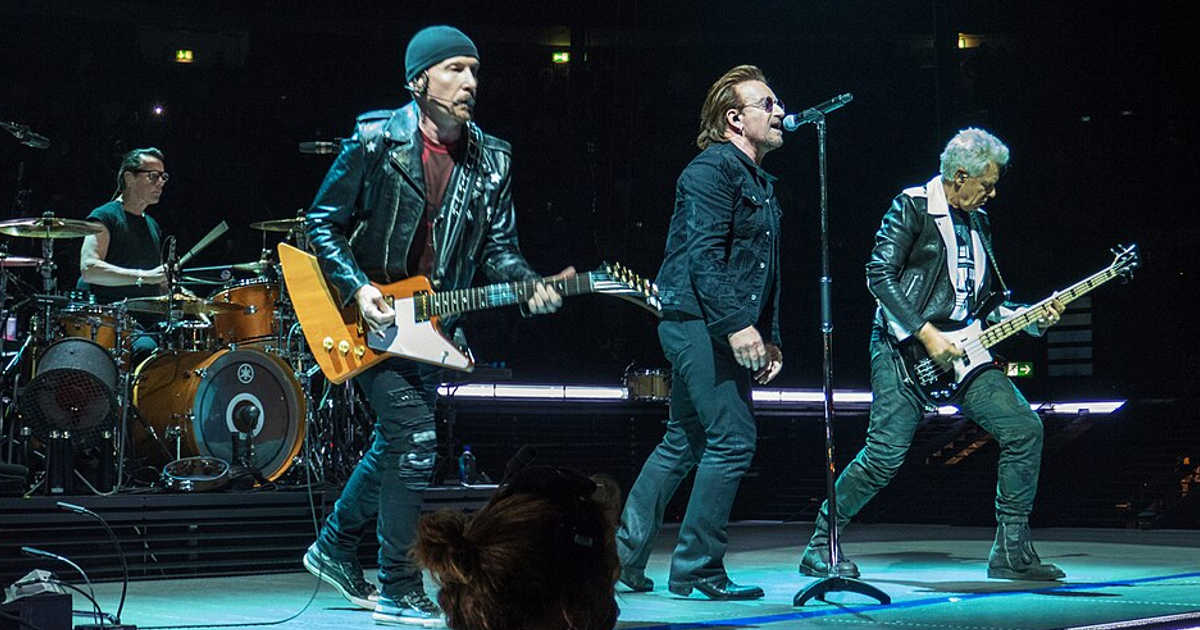
Few bands have travelled as far without losing sight of where they came from as U2. From four young Dubliners making an urgent racket at Windmill Lane to one of the biggest live acts on the planet, Bono, The Edge, Adam Clayton and Larry Mullen Jr have spent decades changing the scale, sound and sometimes the entire rulebook of what U2 could be. Punk urgency became atmospheric rock; American roots music gave way to industrial beats and electronics; stripped-back songwriting returned before another round of experimentation began.
That makes the U2 catalogue a fascinating journey rather than simply a collection of hits. There are acknowledged classics, divisive experiments, overlooked gems and songs that have become part of the fabric of Irish popular culture. If you're wondering where to start - or fancy rediscovering an album you haven't played in years - here's our guide to the U2 story on record.
Boy (1980)
Released on 20th October 1980, U2's debut album Boy
introduced a band that already sounded unusually ambitious. Produced by Steve Lillywhite, it's rooted in post-punk, but there's far more space and atmosphere here than that label suggests. Larry Mullen Jr's drums drive everything forward, Adam Clayton provides a muscular bottom end and The Edge is already avoiding conventional guitar-hero clichés in favour of ringing chords, harmonics and sheets of sound. Bono, meanwhile, sounds like a frontman determined to reach the back wall of every room he enters.
The essential starting point is I Will Follow
, arguably the first truly great U2 song and still capable of lighting up a concert decades later. Out of Control
captures the band's youthful rush, while The Electric Co.
demonstrates how ferocious early U2 could be. Dig deeper into An Cat Dubh/Into the Heart
and you hear a band already interested in mood, tension and dynamics. Boy
isn't U2 waiting to become U2. Most of the ingredients are already there.
October (1981)
U2's difficult second album arrived on 12th October 1981, less than a year after Boy
. October
pushes the atmospheric side of the debut further while bringing spiritual themes increasingly to the foreground. Musically it's post-punk filtered through a more reflective, occasionally stark sound, and there's a searching quality to the record that separates it from the youthful certainty of its predecessor.
Gloria
is the obvious essential listen, with Adam Clayton's bass and The Edge's guitar combining to produce one of early U2's finest moments. Fire
has a nervous energy, while the haunting Tomorrow
has grown in stature with time and ranks among the album's emotional high points. The brief piano-led title track offers another side of the band entirely. October
may not be the first U2 album you'd hand to a newcomer, but it's an important portrait of a group trying to work out what it believed in as well as what it wanted to sound like.
War (1983)
Everything becomes bigger and harder on War
, released on 28th February 1983. The atmospheric post-punk of the first two records is still present, but now it comes with martial drums, political urgency and choruses designed to fill considerably larger rooms. Steve Lillywhite's production gives Larry Mullen Jr's drumming enormous presence, and U2 suddenly sound less like promising contenders and more like a band ready to take on the world.
The opening pair alone makes War essential. Sunday Bloody Sunday
remains one of U2's defining songs, while New Year's Day
combines one of Adam Clayton's most recognisable basslines with The Edge's icy piano and guitar. Two Hearts Beat as One
adds a more danceable pulse, Drowning Man
reveals the record's more atmospheric side and the closing 40
became a concert ritual. This is the album where U2's early intensity finally found songs big enough to match it.
The Unforgettable Fire (1984)
Released on 1st October 1984, The Unforgettable Fire
marked U2's first major reinvention. Steve Lillywhite was replaced by Brian Eno and Daniel Lanois, and the difference is immediate. Instead of simply making the rock sound bigger, U2 began exploring texture, ambience and impressionistic songwriting. Recorded partly at Slane Castle, the album often feels less like four musicians playing songs and more like landscapes being constructed around Bono's voice.
Pride (In the Name of Love)
became the big anthem, but The Unforgettable Fire
goes much deeper. A Sort of Homecoming
is a magnificent opening statement, the title track is one of the band's most atmospheric singles and Bad
grew into one of U2's greatest live songs. Even the instrumental 4th of July
makes sense within the album's hazy world. If War proved U2 could become huge, The Unforgettable Fire
proved they weren't going to settle for repeating the formula.
The Joshua Tree (1987)
Released on 9th March 1987, The Joshua Tree
is the album that turned U2 from a major rock band into global superstars. Brian Eno and Daniel Lanois returned as producers, but this time the atmospheric European sound of The Unforgettable Fire
was mixed with gospel, blues, folk and an increasingly deep fascination with America. The result is widescreen rock music that manages to feel enormous and intimate at the same time.
Its opening run is extraordinary. Where the Streets Have No Name
, I Still Haven't Found What I'm Looking For
and With or Without You
are not merely essential U2 songs; they're three of the defining rock recordings of the 1980s. But don't stop there. Bullet the Blue Sky
is thunderous and confrontational, Running to Stand Still
is devastatingly understated, One Tree Hill
is magnificent and Exit
takes the record somewhere much darker. If you only ever buy one U2 album, The Joshua Tree
remains the obvious place to begin.
Rattle and Hum (1988)
Released on 10th October 1988, Rattle and Hum
is part studio album, part live document and part musical road trip through America. Coming after the extraordinary success of The Joshua Tree
, U2 immersed themselves even further in blues, gospel, soul and rock 'n' roll history. The accompanying film added to the scale of the project, but the record itself is best approached as a sprawling snapshot of a band absorbing its influences in public.
Among the new studio material, Desire
is a thrilling Bo Diddley-powered blast, while Angel of Harlem
channels Memphis soul with effortless warmth. When Love Comes to Town
, featuring B.B. King, brings U2 face to face with one of their blues heroes, while All I Want Is You
is among the band's finest love songs. Heartland
is another gem worth seeking out. Rattle and Hum
can be excessive, but excess was almost the point: this was U2 at the end of the 1980s trying to swallow the history of American music whole.
Achtung Baby (1991)
Released on 18th November 1991, Achtung Baby
is the sound of U2 tearing up their own blueprint. After the earnest Americana of the late '80s, the band headed towards Berlin and embraced alternative rock, industrial sounds, electronic rhythms, distortion and European club culture. The sessions were famously difficult, but the tension helped produce an album that sounds fractured, seductive, modern and gloriously alive.
The classics are everywhere. One
emerged from the troubled sessions to become one of U2's most enduring songs, while The Fly
announced their new direction with distortion and swagger. Mysterious Ways
grooves in a way the '80s U2 rarely did, Until the End of the World
is a powerhouse and Ultraviolet (Light My Way)
has become a fan favourite. Add Zoo Station
, Acrobat
and the bruised Love Is Blindness
, and you have a genuine masterpiece. The Joshua Tree
made U2 enormous; Achtung Baby
showed they were prepared to risk all of it.
Zooropa (1993)
Released on 5th July 1993, Zooropa
began as something smaller to occupy the band during the Zoo TV
era and somehow turned into one of the strangest albums in U2's catalogue. Electronics, distorted vocals, synthesizers and experimental production dominate, with the overload of satellite television, advertising and technology surrounding the Zoo TV tour seeping directly into the music.
The title track Zooropa
is a slow-building marvel and one of U2's boldest album openers. Numb
puts The Edge on lead vocals over a mechanical rhythm, while Lemon
dives headfirst into electronic dance music. The beautiful Stay (Faraway, So Close!)
provides the emotional centre, and The Wanderer
closes proceedings with Johnny Cash on lead vocals. What once seemed like an eccentric detour now sounds remarkably forward-looking.
Pop (1997)
Released on 3rd March 1997, Pop
took U2's fascination with electronic music even further. Working with Flood and Howie B, the band mixed alternative rock with techno, dance beats, loops and club culture. The irony is that an album called Pop
is frequently dark, uneasy and spiritually restless. Its troubled completion and the gigantic PopMart tour sometimes overshadowed the songs, but time has been kind to this record.
Discotheque
remains the obvious entry point, a knowingly flashy collision of rock guitar and dance-floor rhythms. Mofo
goes deeper into electronica, while Staring at the Sun
supplies one of the album's most immediate melodies. Gone
is a terrific overlooked U2 song, and the closing sequence of Please
and Wake Up Dead Man
strips away much of the neon surface to reveal the anxiety underneath. Pop
is imperfect, but its willingness to take risks makes it one of the most interesting records in the U2 catalogue.
All That You Can't Leave Behind (2000)
Released on 30th October 2000, All That You Can't Leave Behind
was widely viewed as U2 coming home. After spending the 1990s pulling their sound apart, they reunited with Brian Eno and Daniel Lanois and put songs, melodies and the chemistry of four musicians back at the centre. It isn't simply a retreat to classic U2, though; the production retains enough of the previous decade's lessons to keep everything sounding contemporary.
Beautiful Day
provided the perfect comeback single and remains one of the band's great crowd-lifting anthems. Stuck in a Moment You Can't Get Out Of
is soulful and direct, Elevation
brings the noise and Walk On
delivers the stadium-sized uplift. The real treasure may be Kite
, a beautifully reflective song that has only become more moving with age. For anyone wanting an accessible bridge between classic and modern U2, this is essential.
How to Dismantle an Atomic Bomb (2004)
Released on 22nd November 2004, How to Dismantle an Atomic Bomb
pushed the back-to-basics approach of its predecessor into a louder, more guitar-driven direction. Steve Lillywhite returned as a principal producer, and much of the record aims for the direct physical punch of four musicians playing rock music. Beneath that surface, however, grief and family run through some of Bono's most personal writing, particularly following the death of his father.
Vertigo
kicks the doors open and remains the album's most immediate rocker, but Sometimes You Can't Make It on Your Own
provides its emotional heart. City of Blinding Lights
quickly became a live favourite and is one of 21st-century U2's finest anthems. All Because of You
supplies more guitar muscle, while Original of the Species
deserves considerably more attention than it usually receives. It's a polished rock record, but its best moments work because there's real vulnerability underneath the volume.
No Line on the Horizon (2009)
Released in Ireland on 27th February 2009, No Line on the Horizon
reunited U2 with Brian Eno and Daniel Lanois and promised another period of experimentation. Sessions took the band to Fez in Morocco as well as Dublin, New York and London, and traces of that search for unfamiliar musical territory remain throughout. The result sits somewhere between atmospheric art rock, electronics and the stadium-sized U2 sound of the previous decade.
The album's reputation improves considerably when you move beyond its singles. Magnificent
is vintage U2 on a grand scale, but Moment of Surrender
is the masterpiece - a long, slow-burning soul-influenced song that ranks among their best later work. Breathe
has real momentum, the title track is wonderfully strange and Fez – Being Born
hints at the more experimental album U2 might have made. Uneven perhaps, but much more rewarding than its place in the band's history sometimes suggests.
Songs of Innocence (2014)
Songs of Innocence
was first released digitally on 9th September 2014, before its physical release in October. Musically it reconnects U2 with the rock, punk and new-wave music that shaped them, while lyrically Bono looks backwards to childhood, family, first love, loss and growing up in Dublin. That autobiographical focus gives the album a unity that can get overlooked amid memories of its controversial iTunes distribution.
The songs are worth hearing on their own terms. Every Breaking Wave
is the standout and one of U2's strongest 21st-century ballads. Song for Someone
is similarly affecting, while Iris (Hold Me Close)
addresses Bono's mother with striking directness. Cedarwood Road
returns to the streets of his youth and Raised by Wolves
confronts the violence that formed the backdrop to 1970s Ireland. Forget how the album arrived on people's phones for a moment: there's a deeply personal U2 record underneath.
Songs of Experience (2017)
Released on 1st December 2017, Songs of Experience
acts as the companion to Songs of Innocence
. Where its predecessor looked backwards at youth, this album is written from the perspective of age, experience and mortality. The production combines polished modern rock, pop and electronics, with Bono framing several songs as messages to people and places closest to him.
The Little Things That Give You Away
is the essential deep cut and arguably the record's emotional peak, gradually building from restraint into something much bigger. You're the Best Thing About Me
supplies the immediate pop-rock hook, Red Flag Day
has a welcome urgency and The Blackout
gives Adam Clayton's bass plenty of room to move. Love Is Bigger Than Anything in Its Way
delivers the sweeping finale you'd expect from U2, while 13 (There Is a Light)
quietly connects the album back to Songs of Innocence
.
Songs of Surrender (2023)
Released on 17th March 2023, Songs of Surrender
isn't a conventional U2 studio album. Instead, the band returned to 40 songs from across their career and re-recorded or radically rearranged them. The approach is generally stripped-back and reflective, replacing some of the original recordings' stadium-sized dynamics with acoustic guitars, piano, altered lyrics and older voices looking back at songs written by younger men.
Results inevitably vary when the originals are as familiar as these, but that's also what makes the project interesting. Bad
works beautifully in its more intimate setting, while Every Breaking Wave
feels entirely at home without the bigger production. nvisible
, Stay (Faraway, So Close!)
and Stories for Boys
reward rediscovery, while transformations of songs such as One
and Where the Streets Have No Name
invite listeners to hear old favourites from a different angle. Think of Songs of Surrender less as a greatest-hits collection and more as U2 having a conversation with their younger selves.
How to Re-Assemble an Atomic Bomb (2024)
Released as part of the 20th-anniversary How to Dismantle an Atomic Bomb
project in November 2024, How to Re-Assemble an Atomic Bomb
is what U2 described as a shadow album
: ten recordings drawn from the original 2000s sessions, including previously unheard material alongside newly remastered tracks. Rather than a brand-new U2 studio album in the conventional sense, it's an alternative route through the creative period that produced the 2004 record. What stands out is how raw and physical much of it feels, with less of the polish associated with the finished parent album.
The essential listen is Luckiest Man in the World
, the long-awaited official incarnation of the song U2 fans knew for years as Mercy
. Country Mile
has the kind of expansive momentum that suits the band perfectly, while Evidence of Life
and Happiness
underline just how much worthwhile material was left behind. Picture of You (X+W)
and All Because of You 2
provide further glimpses into songs evolving in the studio. For committed U2 listeners, it's more than an anniversary curiosity: it's a fascinating alternative ending to one of the band's most productive recording periods.
Where Should You Start With U2?
For a first U2 album, The Joshua Tree
remains almost impossible to beat. It has the hits, the atmosphere and the sense of scale that made the band one of the biggest in the world. Follow it with Achtung Baby
to hear the same four musicians deliberately destroy that successful formula and rebuild themselves for a new decade.
After that, head backwards to War
and The Unforgettable Fire
, then forward to Zooropa
and All That You Can't Leave Behind
. And don't ignore the supposed difficult records. Pop
, No Line on the Horizon
and even the later albums contain songs capable of standing beside far more celebrated moments in the U2 catalogue. More than four decades after Boy
, that's ultimately what makes this discography worth exploring: U2 have rarely been content simply to stay where they were.
Read More | 10 Bands That Sound Like U2